Water quality is one of those things people tend to notice only when something goes wrong. Maybe the water tastes a little strange, a tap develops stubborn stains, or equipment starts needing attention more often than it used to. For homeowners, these issues can be frustrating. For businesses, they can also affect daily operations, maintenance budgets, and customer satisfaction.
The tricky part is that water problems aren’t always visible. Water can look perfectly clear and still contain dissolved minerals, unwanted chemicals, or fine particles. That’s why choosing a treatment method should begin with understanding the water itself. Once the underlying issue is clear, it’s much easier to find a practical solution instead of spending money on equipment that doesn’t address the real problem.
Start by Understanding What’s in Your Water
Water quality varies depending on its source, the surrounding environment, and the treatment it receives before reaching a property. Municipal supplies, private wells, and industrial water sources can all have different characteristics. Even two buildings in the same area may experience different problems because of their plumbing and equipment.
Common concerns include sediment, unpleasant tastes or odors, mineral buildup, and changes in pH. Some properties may also need testing for specific contaminants based on their water source and local conditions.
A simple visual check can reveal obvious problems, but it won’t tell the whole story. A basic screening may identify certain characteristics, while a certified laboratory can provide more detailed results when particular contaminants are a concern. The right testing approach depends on how the water will be used and what needs to be investigated.
This first step matters because different treatment technologies do different jobs. A filter designed to capture particles won’t necessarily remove dissolved minerals, and a softener won’t automatically eliminate every chemical that may affect water quality.
Removing Particles and Improving Water Clarity
Sediment is among the more noticeable water-quality concerns. Sand, rust particles, silt, and other suspended material can enter a water supply through several routes. In some cases, they come from the source itself. In others, aging pipes or maintenance work may contribute to the problem.
These particles can make water appear cloudy and may gradually clog plumbing fixtures, appliance screens, and downstream treatment equipment. Even when the water looks clear most of the time, occasional sediment can still create maintenance headaches.
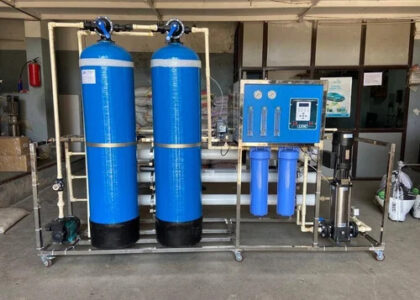
A properly selected sediment & carbon filtration setup can help address two different concerns. Sediment filters physically capture suspended particles, with performance depending on the filter’s design and micron rating. Activated carbon filters work differently: they can reduce certain substances that affect taste and odor, including chlorine when the filter is suitable for that application.
The order of installation is important. A sediment filter is often placed before a carbon filter to prevent larger particles from prematurely clogging the carbon media. However, the correct arrangement depends on the system design and the quality of the incoming water.
Filter capacity deserves attention, too. A filter that works well in a small household may not provide enough flow for a busy commercial kitchen or a building with several bathrooms. Replacement intervals also vary with water conditions and usage. Waiting until the flow becomes noticeably weaker isn’t always the best maintenance strategy.
Managing Minerals With Ion Exchange
Hard water is another common issue, especially in areas where groundwater contains substantial amounts of calcium and magnesium. These minerals can leave white deposits on taps, shower screens, heating elements, and other surfaces. Over time, scale may affect the performance of water heaters and certain commercial appliances.
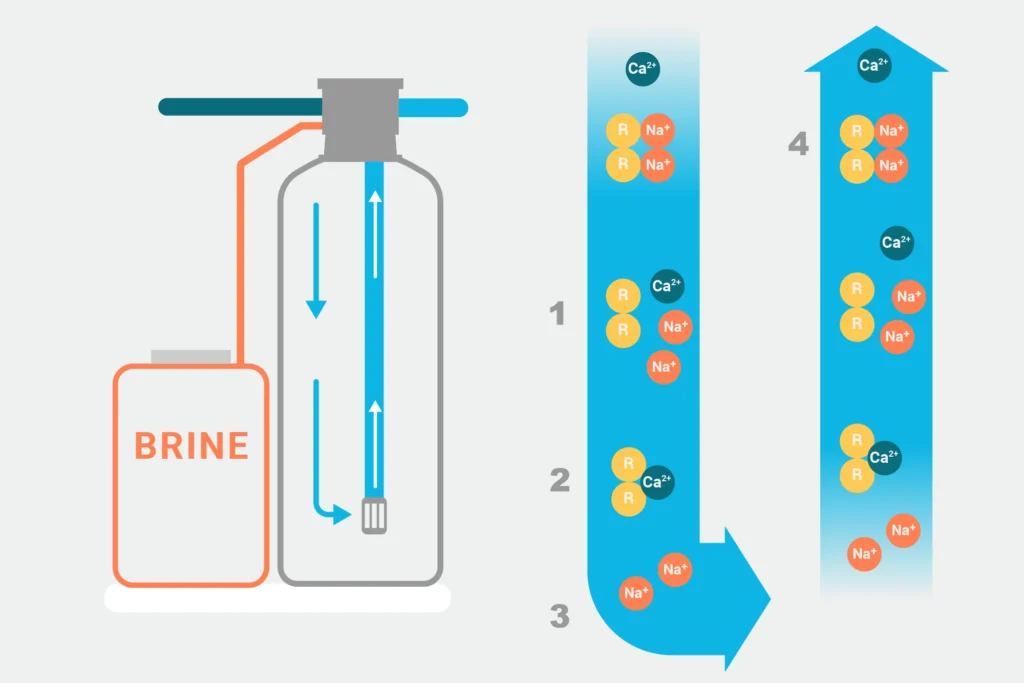
Ion exchange is a well-established treatment method used to address specific dissolved substances. In water softening, a resin typically exchanges calcium and magnesium ions for sodium or potassium ions. Other ion-exchange resins can be selected for different treatment goals, depending on the substances that need to be reduced.
The broader approach, anion & cation exchange, involves treating negatively charged ions, known as anions, and positively charged ions, known as cations. The particular resin and system configuration determine which ions are targeted. These processes are used in applications ranging from water softening to specialized industrial purification.
It’s worth remembering that ion exchange isn’t one universal solution. A conventional softener addresses hardness, but it doesn’t remove all dissolved substances or guarantee that water is safe for drinking. Regeneration requirements, resin selection, water chemistry, and wastewater handling should all be considered before installation.
For businesses, proper sizing is especially important. A system must cope with normal demand as well as busy periods, when several appliances may be drawing water at once. A professional assessment can help avoid a unit that is either inadequate or unnecessarily large.
Why pH and Chlorine Levels Need Careful Attention
Water chemistry can affect everything from plumbing materials to the performance of a treatment system. pH indicates how acidic or alkaline water is, but it doesn’t measure the full quality of the supply. Water with an unsuitable pH may contribute to corrosion, scaling, or operational difficulties, depending on its composition and how it is used.
Chlorine has a different purpose. It is widely used as a disinfectant to control harmful microorganisms in water supplies. Removing too much chlorine without considering the wider treatment process may affect disinfection protection, so chlorine management needs to be planned rather than approached as a simple taste adjustment.
In suitable applications, pH adjustment & chlorine injection equipment can help control water chemistry and disinfectant levels. pH adjustment may involve carefully dosed chemicals or other methods selected for the water conditions. Chlorine injection systems add a measured quantity of chlorine to achieve a defined treatment objective.
These systems need appropriate monitoring, calibration, and safety procedures. Chemical dosing should be based on water testing, flow rates, contact time, and the intended use of the water. Simply adding more chemical doesn’t necessarily improve the result. In fact, incorrect dosing can create new problems.
For drinking-water applications, treatment should follow applicable regulations and guidance. Where disinfection is required, the system needs to be designed and maintained to deliver the intended result consistently.
Choosing Equipment That Fits the Actual Problem
It’s easy to get drawn into product comparisons before knowing what the water needs. One supplier may recommend a large filtration unit, while another suggests a softener or chemical dosing system. The best choice isn’t necessarily the most advanced one. It is the system that addresses the identified concern reliably and economically.
Start with water test results and a clear description of the application. Is the main problem sediment, hardness, taste, pH, or a specific dissolved contaminant? How much water is used each day? Are there peak-demand periods? Will the equipment supply drinking water, support a production process, or protect plumbing and appliances?
Also consider the less glamorous details: replacement media, electricity requirements, drainage, service access, and the cost of routine maintenance. These factors influence the total cost of ownership just as much as the purchase price.
A reputable water treatment professional should explain the equipment’s capabilities and limitations in plain language. Ask what the system removes, what it doesn’t remove, how its performance will be checked, and how often components need servicing.
Better Water Begins With Better Decisions
Water treatment doesn’t have to be complicated, but it does require a thoughtful approach. Sediment filtration, carbon treatment, ion exchange, pH adjustment, and chlorine dosing each serve different purposes. Used appropriately, they can improve water quality and support more reliable operation in homes and commercial facilities.
The sensible starting point is always the same: identify the concern, test the water using a suitable method, and select technology that matches the results. Keep up with maintenance, review performance periodically, and seek professional advice when water conditions change.
Clear water may look reassuring, but appearance alone doesn’t tell the full story. Understanding what is in the supply—and knowing which treatment method can address it—is what makes a water treatment investment worthwhile in the long run.