Category: Technology

Technology analysis, digital systems, products and developments worth understanding beyond the headline.

  • Why Enterprise SEO Companies Are Not All Built the Same — and How to Tell the Difference

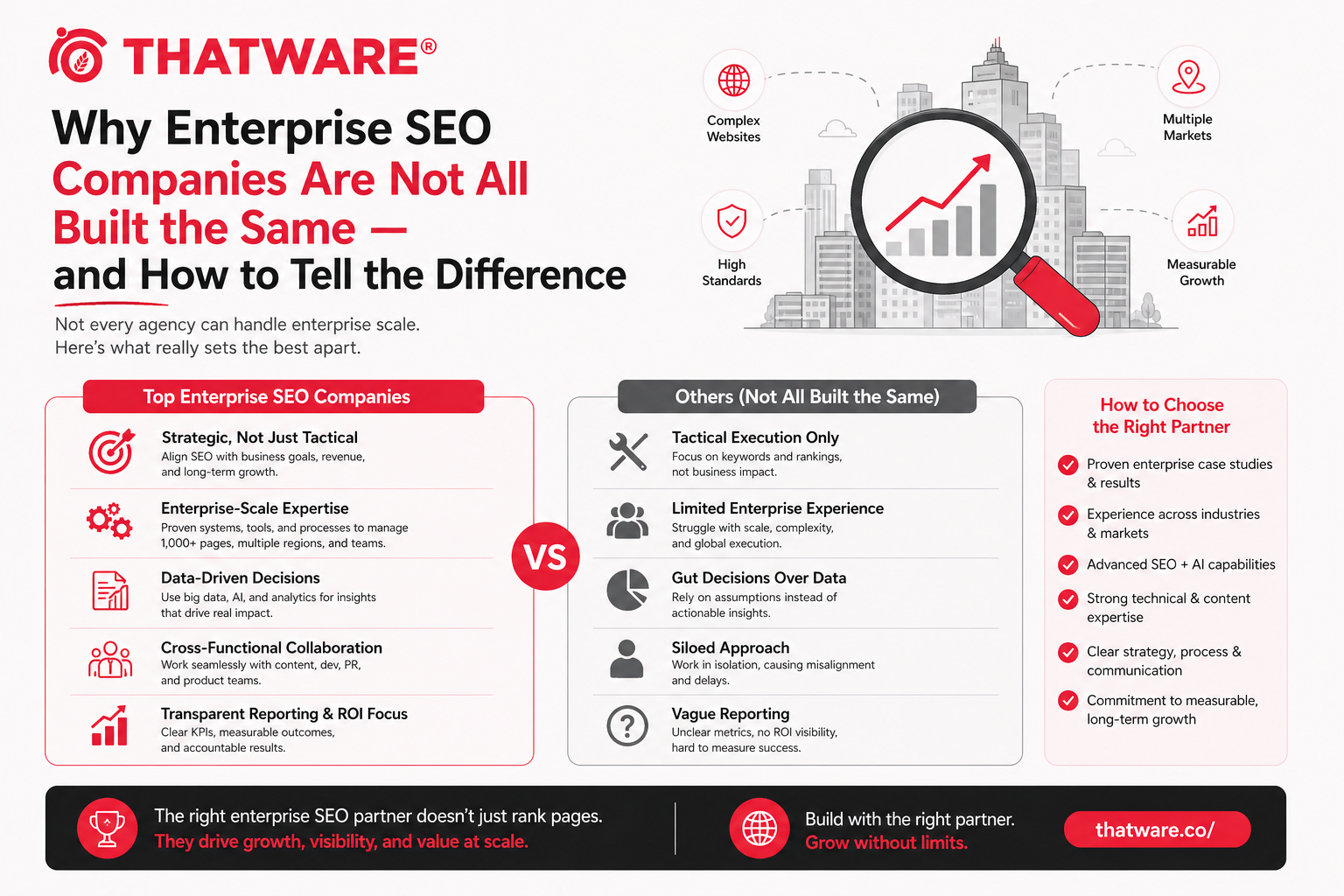
    Why Enterprise SEO Companies Are Not All Built the Same — and How to Tell the Difference

    The enterprise SEO market has a presentation problem. The agencies serving Fortune 500 clients and the agencies aspiring to serve mid-market clients with enterprise-sounding pitches look surprisingly similar in their marketing materials. Case studies are curated for maximum impressiveness. Capability lists are comprehensive. Process documentation is detailed and professional-looking.

    The actual differences in capability, depth, and enterprise-readiness are often invisible until you’re twelve months into a contract and recognizing the gap between what was pitched and what’s being delivered.

    This gap is worth understanding before signing, not after. And the signals that reveal it are visible to buyers who know where to look.

    What Actually Distinguishes Enterprise SEO Capability

    Enterprise SEO is substantively different from SMB SEO in ways that go beyond scale. The challenges are qualitatively different, not just quantitatively larger.

    Technical complexity at enterprise scale involves problems that don’t exist for smaller sites. Crawl budget management for sites with millions of pages. JavaScript rendering at scale across diverse tech stacks maintained by multiple development teams. International hreflang networks covering dozens of markets. Site migrations that involve significant traffic risk and require cross-functional coordination to execute safely. These are genuinely difficult problems that require practitioners who have encountered and solved them multiple times.

    An agency pitching enterprise SEO without genuine case studies and practitioner experience in these specific technical scenarios is presenting aspirational capability, not demonstrated capability. The risk of discovering this during a critical migration or technical crisis is significant.

    Organizational navigation is the non-technical enterprise competency that matters as much as technical skill. Getting SEO recommendations implemented inside large organizations requires understanding how to build internal case for prioritization, navigate development queues, align multiple stakeholders with different priorities, and maintain momentum through the political friction that large organizations generate. This is a soft skill that doesn’t appear in technical capability assessments but dramatically affects whether the work actually gets done.

    Enterprise seo company agencies with genuine enterprise experience have developed specific approaches to organizational alignment. Agencies without it often discover the challenge when recommendations sit unimplemented for months.

    The Team Quality Question

    Enterprise SEO requires senior practitioners doing the actual work. The most common disappointment in enterprise SEO relationships is the discrepancy between the seniority of the team that pitched the business and the seniority of the team that works on it daily.

    The pitch team is typically composed of the agency’s most experienced and articulate people, who are also responsible for winning other new business simultaneously. The account team that takes over after signing is often more junior, working under senior supervision that may be lighter than the pitch implied.

    This is not always the case, and many agencies are transparent about their team structures. But the question is worth asking directly: who specifically will be working on this account, at what level, and what will their time allocation be? Getting specific answers and building those answers into contract expectations protects against the team quality bait-and-switch.

    The Measurement Sophistication Indicator

    Enterprise SEO agencies that have genuinely served enterprise clients tend to have sophisticated measurement frameworks because enterprise clients demand them. The ability to demonstrate organic search contribution to revenue, not just traffic, requires analytics infrastructure that takes time and expertise to build.

    Ask potential enterprise SEO partners how they would measure the business impact of the program, specifically how they would connect organic traffic improvements to revenue outcomes. The sophistication of the answer reveals a lot about their experience with enterprise accountability.

    Advanced seo agency india providers that have built enterprise measurement capability can describe specific methodologies for attribution, assisted conversion tracking, and organic revenue contribution analysis. Agencies without this experience tend to give answers that stay at the traffic and ranking level without connecting to business outcomes.

    The Crisis Experience Question

    One of the most revealing questions in enterprise SEO evaluation is asking about site migration or algorithm recovery experience. These are the scenarios where enterprise SEO expertise is most critically tested and where the gap between experienced and inexperienced agencies is most stark.

    Ask for a specific case study of a complex site migration they managed, including what went wrong and how they handled it. Ask about an algorithm update that significantly affected a client’s traffic and what the recovery strategy involved. Agencies with genuine enterprise experience have these stories and can tell them honestly, including the parts that were difficult. Agencies without it tend to have generic answers that don’t contain the specific detail that actual experience produces.

    The ability to manage a crisis, maintain client confidence, diagnose the problem accurately, and execute a recovery strategy under pressure is a core enterprise SEO competency. It’s also one that only develops through actually having managed these situations.

    The Reference Check That Actually Reveals Capability

    Enterprise SEO reference checks should include specific questions about the agency’s performance under pressure, not just their standard work. Did they navigate a major algorithm update well? How did they handle a significant technical crisis? How did they manage stakeholder relationships when results were disappointing?

    The reference contacts the agency provides will be their strongest relationships. Even within those relationships, asking about difficult moments reveals how the agency performed when things weren’t going smoothly, which is ultimately more informative than asking about their best work.

    The due diligence process for enterprise SEO partners is proportionate to the investment. Large contracts over extended periods deserve thorough evaluation. The agencies that are genuinely enterprise-ready welcome this scrutiny because they have the experience and track record to stand behind.

  • Why Your Business Should Use a Case Management Platform

    Why Your Business Should Use a Case Management Platform

    In today’s fast-paced business world, efficiency is key to maintaining customer satisfaction and smooth operations. One of the most effective ways to improve business processes is by using a case management platform. This tool helps businesses organize, track, and manage all the cases, tasks, and client interactions in a streamlined manner.

    Whether your company is small or large, adopting a case management platform can significantly enhance your ability to serve customers and keep your operations running smoothly.

    Enhanced Organization and Efficiency

    A Case management platform allows businesses to keep all information in one central location. Without such a system, businesses often rely on manual processes or multiple tools to track different cases and customer interactions. This can lead to mistakes, delays, and disorganization.

    With a case management platform, all relevant information is accessible in a single place. This eliminates the need to search through emails, spreadsheets, or physical files to find important details. It improves efficiency by allowing employees to quickly retrieve the necessary data, ensuring that no case is forgotten and no task is overlooked.

    Improved Communication and Collaboration

    Communication is a vital part of any business operation, especially when dealing with customer cases. A case management platform enhances communication by making it easier for teams to collaborate. With features like shared notes, task assignments, and real-time updates, team members can stay on the same page.

    Everyone involved in a case can see its progress, updates, and who is responsible for which task. This transparent system reduces misunderstandings and delays, making it easier for teams to work together towards resolving issues quickly and effectively.

    Better Tracking and Accountability

    Another major advantage of a case management platform is that it helps businesses track progress and maintain accountability. Each case can be assigned to specific employees, and deadlines can be set to ensure timely resolution. The platform allows managers to monitor the progress of each case and see if tasks are being completed on time.

    This helps identify any potential delays or issues early, allowing corrective actions to be taken before they affect customer satisfaction. By holding team members accountable, the platform ensures that no case is neglected or forgotten.

    Data-Driven Insights for Better Decision-Making

    A case management platform also offers businesses valuable data that can be used to make informed decisions. The platform tracks various metrics, such as the average time taken to resolve a case, the number of cases handled by each employee, and the success rates of different resolutions.

    This data can help managers identify areas for improvement, optimize workflows, and better allocate resources. Over time, businesses can use this information to refine their processes and improve overall performance, leading to increased efficiency and customer satisfaction.

    Conclusion

    In conclusion, using a case management platform is an essential step for businesses that want to stay competitive and organized. It not only enhances efficiency by centralizing information, but it also improves communication, accountability, and decision-making.

    By streamlining case handling processes, businesses can provide better service to their customers, reduce errors, and create a more collaborative work environment.

  • MacBook 16 Inch, MacBook Pro M3 Max, or MacBook 13 Inch: Which to Choose?

    MacBook 16 Inch, MacBook Pro M3 Max, or MacBook 13 Inch: Which to Choose?

    When it comes to choosing the right MacBook, you have several options, including the MacBook 16-inch, MacBook Pro M3 Max, and MacBook 13-inch. Each of these models offers different features, sizes, and performance levels. In this article, we’ll explore the differences between these models and help you decide which one is best for you.

    MacBook 16 Inch: A Bigger, Better Display

    The MacBook 16-inch is a perfect choice for those who need a larger screen for productivity, creativity, or entertainment. With its bigger display, you get more screen real estate, making it easier to multitask and enjoy detailed visuals. Whether you’re editing photos, working on spreadsheets, or watching movies, the MacBook 16-inch offers an immersive experience that smaller models can’t match.

    This model is especially popular among professionals who require extra screen space and performance

    MacBook Pro M3 Max: Maximum Power for Professionals

    The MacBook Pro M3 Max is designed for those who need extreme power and performance. Equipped with Apple’s latest M3 Max chip, this model is ideal for heavy-duty tasks like 3D rendering, machine learning, and high-resolution video editing. It’s packed with features that deliver impressive speeds, even for the most demanding applications.

    One of the standout features of the MacBook Pro M3 Max is its enhanced GPU performance, which is perfect for graphic-intensive tasks. If you’re a professional working with resource-heavy software, the MacBook Pro M3 Max can handle it with ease.

    MacBook 13 Inch: Compact Yet Powerful

    For those who value portability and ease of use, the MacBook 13-inch is an excellent choice. This model strikes a balance between performance and portability, offering enough power for most everyday tasks like browsing the web, word processing, and light photo editing. The MacBook 13-inch is powered by Apple’s M2 chip, which provides great performance while maintaining energy efficiency.

    The compact design makes it easy to carry around, making the MacBook 13-inch a top choice for students, travellers, and anyone who needs a lightweight laptop that doesn’t sacrifice performance. While it may not be as powerful as the 16-inch or M3 Max models, the MacBook 13-inch is still a solid option for those who need a reliable MacBook for daily use.

    Why Choose iPlanet for Your MacBook?

    If you’re considering purchasing a MacBook, look no further than iPlanet. Known for offering high-quality products at competitive prices, iPlanet provides a wide range of Apple devices, including the MacBook 16-inch, MacBook Pro M3 Max, and MacBook 13-inch. Whether you’re upgrading your old laptop or purchasing your first MacBook, iPlanet offers expert advice, fast shipping, and excellent customer service to ensure you find the perfect MacBook for your needs.

    In conclusion, the MacBook 16-inch, MacBook Pro M3 Max, and MacBook 13-inch all offer distinct advantages depending on your needs. Choose wisely, and don’t forget to check out iPlanet for your next MacBook purchase.

  • Web Designs by Expert Web Designers in Corby

    Web Designs by Expert Web Designers in Corby

    A professionally designed website is crucial for any business aiming to establish a strong online presence in today’s digital age. Whether you’re a small start-up, a growing local business, or an established company in Corby, having a well-designed website can help you attract more customers, showcase your offerings, and stand out from competitors. By partnering with a skilled web designer in Corby, you can create a custom website tailored to your business needs and goals. Learn more: https://lowcostwebdesigns.co.uk/web-designs-web-designer-corby/


    Why Choose a Web Designer in Corby?

    Hiring a local web designer in Corby comes with significant benefits. Local designers understand the community, its market trends, and the preferences of its residents, allowing them to create websites that connect with your target audience. Here’s why choosing a Corby-based web designer is a great decision:

    1. Local Market Knowledge
      A web designer in Corby has insights into the local business landscape and audience preferences, ensuring your website resonates with your potential customers.
    2. Personalized Collaboration
      Face-to-face consultations allow for better communication, making it easier to share your vision and receive updates tailored to your specific requirements.
    3. Tailored Solutions
      Local designers specialize in creating bespoke websites that reflect your brand identity and meet your business objectives.
    4. Faster Support and Updates
      Proximity ensures quicker responses, updates, and revisions to keep your website performing at its best.

    Key Features of Modern Web Designs in Corby

    Professional web designers in Corby focus on delivering websites that are both visually appealing and functionally robust. A modern, expertly crafted website includes the following features:

    • Mobile Responsiveness: Your website will adapt seamlessly to all devices, including desktops, smartphones, and tablets, ensuring a consistent user experience.
    • Fast Loading Speeds: Speed optimization keeps users engaged and helps improve search engine rankings.
    • SEO Optimization: SEO-focused designs boost your website’s visibility on search engines, driving organic traffic to your site.
    • Secure Hosting: SSL certificates and secure hosting solutions protect your website and customer data, building trust with users.
    • Interactive Features: Contact forms, social media integration, and image galleries enhance user engagement and interaction.

    Services Offered by Web Designers in Corby

    Web designers in Corby provide a wide range of services to help businesses succeed in the digital world. These include:

    1. Custom Website Design
      Creating unique and visually appealing designs tailored to your brand and business goals.
    2. E-commerce Development
      Building secure, user-friendly online stores with optimized navigation and payment gateways to enhance the shopping experience.
    3. SEO Services
      Implementing on-page and technical SEO strategies to improve your site’s rankings on search engines.
    4. Content Management Systems (CMS)
      Developing websites on platforms like WordPress, allowing you to easily update and manage content.
    5. Website Maintenance and Support
      Regular updates, backups, and troubleshooting to ensure your website remains functional and secure.
    6. Graphic Design and Branding
      Designing logos, banners, and other visual assets to create a cohesive and professional brand image.

    The Importance of Professional Web Design

    Investing in professional web design provides significant advantages for your business. Here’s why it’s essential:

    1. Builds Credibility
      A sleek, modern website establishes your business as professional and trustworthy, giving potential customers confidence in your brand.
    2. Improves User Experience (UX)
      Thoughtful layouts, intuitive navigation, and fast loading speeds ensure a seamless experience for visitors, keeping them on your site longer.
    3. Supports SEO Performance
      Professionally designed websites rank higher on search engines, increasing your visibility and attracting more organic traffic.
    4. Drives Conversions
      Clear calls-to-action and user-friendly designs encourage visitors to take the next step, whether it’s contacting you, signing up, or making a purchase.
    5. Scalable for Growth
      Expertly designed websites are built to grow with your business, accommodating new features and content as your needs evolve.

    Steps to Building a Successful Website

    When you work with a web designer in Corby, the process is structured to deliver the best results. Here’s what to expect:

    1. Consultation and Planning
      Discuss your business goals, target audience, and design preferences to establish a clear vision for your website.
    2. Wireframe and Prototype Development
      A visual blueprint is created to outline your site’s structure, layout, and functionality.
    3. Design and Development
      Using the latest tools and technologies, the designer brings your vision to life, focusing on aesthetics, performance, and usability.
    4. Testing and Quality Assurance
      Rigorous testing ensures your website functions perfectly across all devices and browsers.
    5. Launch and Ongoing Support
      Once your site goes live, the designer provides maintenance, updates, and troubleshooting to keep it running optimally.

    How to Choose the Right Web Designer in Corby

    Selecting the right web designer is key to achieving a website that meets your expectations and goals. Here’s how to make the best choice:

    1. Review Their Portfolio
      Check the designer’s previous projects to evaluate their style and ability to deliver high-quality results.
    2. Read Client Testimonials
      Feedback from past clients can offer insights into the designer’s expertise, professionalism, and reliability.
    3. Discuss Your Needs
      Make sure the designer understands your business objectives and can provide solutions tailored to your requirements.
    4. Request a Detailed Proposal
      A clear breakdown of costs, timelines, and deliverables ensures transparency and sets realistic expectations.
    5. Confirm Post-Launch Support
      Ensure the designer offers ongoing maintenance and support to address any issues that may arise after launch.

    Transform Your Online Presence with a Web Designer in Corby

    A professionally designed website is an invaluable asset for businesses in Corby looking to succeed in the digital world. By working with an experienced web designer, you can create a website that reflects your brand, engages your audience, and drives measurable results.

    From custom designs and SEO optimization to e-commerce functionality and responsive layouts, Corby web designers provide the expertise needed to help your business thrive. Take the first step toward building a powerful online presence—contact a professional web designer in Corby today!

  • Propane’s Versatile Role in Modern Industries

    Propane’s Versatile Role in Modern Industries

    Energy efficiency and sustainability have become pivotal for modern industries. Propane, a clean-burning and versatile energy source, offers numerous benefits across various sectors. This listicle explores innovative applications of propane in modern industries, highlighting its impact and advantages.

    Propane in Agriculture

    Agriculture relies heavily on efficient and reliable energy sources. Propane offers farmers a clean, cost-effective solution for powering a range of agricultural equipment, from grain dryers to irrigation pumps. Its use guarantees timely and efficient crop processing, which is important for maximizing yields. Propane’s portability allows it to be used in remote locations, providing farmers with the energy they need regardless of their proximity to the grid. Furthermore, propane’s low emissions are environmentally friendly, aligning with the growing demand for sustainable farming practices.

    Propane in Transportation

    The transportation industry faces increasing pressure to reduce emissions and improve fuel efficiency. Propane, as an alternative fuel, offers a significant reduction in greenhouse gas emissions and lower fuel costs compared to gasoline or diesel. It powers a wide range of vehicles, including buses and delivery trucks, providing substantial environmental benefits without compromising performance. Many fleets have transitioned to propane to meet stringent environmental standards. Propane’s ability to extend engine life and reduce maintenance costs makes it a smart choice for transportation companies aiming to improve their ecological footprint and operational efficiency.

    Propane in Construction

    Construction projects demand reliable and powerful energy sources. Propane is ideal for fueling equipment such as forklifts, heaters, and generators, allowing for continuous operations on job sites. Its clean combustion properties reduce air pollution, contributing to healthier work environments. Propane’s portability and ease of storage make it a practical choice for construction sites where grid power may be unavailable. By using propane, construction companies can minimize downtime, increase productivity, and reduce their carbon footprint.

    Propane in Manufacturing

    Manufacturing industries require consistent and efficient energy sources to power their operations. Propane plays an important role in heating, metal cutting, and other industrial processes. Its consistent performance helps manufacturing lines operate smoothly, reducing production interruptions and increasing output. Propane’s clean-burning nature minimizes equipment wear and tear, leading to longer equipment lifespan and reduced maintenance costs. By integrating propane into their energy mix, manufacturers can achieve higher efficiency, lower operational costs, and improved environmental sustainability.

    Propane in Hospitality

    The hospitality industry prioritizes guest comfort and operational efficiency. Propane is widely used for heating, cooking, and water heating in hotels and resorts. It provides a steady and reliable energy supply for kitchens, laundry facilities, and swimming pools, improving guest experiences. Propane’s energy efficiency helps hospitality businesses reduce operational costs, allowing them to allocate resources to other areas of service improvement. The use of propane aligns with efforts to provide environmentally responsible hospitality, appealing to eco-conscious consumers.

    Propane in Residential Heating

    In residential settings, propane is a popular choice for heating homes and water. Its efficiency and reliability provide homeowners with a cost-effective and environmentally friendly heating solution. Propane furnaces and water heaters offer consistent warmth and hot water supply, particularly in areas where natural gas is unavailable. The adoption of propane in residential heating reduces carbon emissions and supports efforts to achieve more sustainable living environments. Homeowners benefit from lower utility bills and the peace of mind that comes with a reliable energy source.

    Propane in Emergency Power Generation

    In situations where power reliability is necessary, propane serves as an effective fuel for emergency generators. During power outages, propane generators provide essential backup power for homes, businesses, and important facilities. Unlike gasoline or diesel, propane does not degrade over time, providing long-term fuel stability. Its clean-burning properties make it a preferred choice for emergency power, reducing air pollution during generator operation. Propane’s reliability and availability make it an indispensable component of emergency preparedness plans.

    Conclusion

    Propane’s versatility and environmental benefits make it a valuable energy source across various industries. From agriculture to emergency power generation, propane supports modern industrial needs with efficiency and sustainability. By integrating propane into their operations, businesses can achieve significant cost savings, increase productivity, and contribute to a greener future. Discover the advantages of propane and explore how it can transform your industry’s energy strategy by working with propane providers like Crowley Energy.

  • 5 Ways Recycling Different Metals Can Benefit the Planet

    5 Ways Recycling Different Metals Can Benefit the Planet

    When trying to figure out ways to help the planet, recycling metals is a vital step toward achieving a sustainable future. Each type of metal offers unique benefits when recycled, contributing to environmental conservation and economic efficiency. Here’s a look at how recycling different metals makes a positive impact.

    Aluminum

    Aluminum is one of the most recycled metals globally and for a good reason. The energy saved through aluminum recycling can result in fewer carbon emissions, making it an eco-friendly choice. Aluminum can be recycled indefinitely without losing quality, making it a sustainable option for packaging and manufacturing industries. By recycling aluminum cans and products, the demand for new aluminum is reduced and, in turn, preserves natural resources while reducing environmental degradation.

    Steel

    Steel is the most recycled material worldwide, primarily due to its magnetic properties, which make it easy to find and separate from waste. Recycling steel significantly reduces the need for mining new iron ore, conserving both natural resources and energy. This process not only cuts down on emissions, thereby lowering the carbon footprint, but also supports sustainable manufacturing practices. By keeping steel out of landfills, you better reduce pollution and contribute to cleaner soil and water systems.

    Copper

    Copper is a valuable metal used extensively in electrical wiring, plumbing, and electronics. Copper recycling uses less energy compared to extracting it from ore, reducing greenhouse gas emissions. Since copper reserves are limited, recycling helps conserve this precious resource for future generations. Recycled copper retains its properties, making it as effective as newly mined copper. By recycling old wires, plumbing fixtures, and electronic components, you ensure that copper continues to be available for new technological advancements.

    Lead

    Lead, commonly used in batteries and protective shielding, poses serious environmental and health risks if not disposed of properly. Recycling lead prevents it from entering landfills, where it can leach into the soil and water, causing contamination. It also avoids the hazards associated with lead mining and processing. Recycled lead is primarily used in new batteries, reducing the need for new lead extraction. By recycling lead, you’re able to protect ecosystems and human health, promoting safer environmental practices.

    Zinc

    Zinc is used in galvanizing steel to prevent rust and in producing alloys like brass. Recycling zinc conserves energy and reduces emissions compared to mining and refining new zinc. Recycled zinc is economically beneficial, as it costs less to recycle than to produce from raw materials. Additionally, recycling zinc helps industries save money and resources, contributing to a more efficient and sustainable economy. By incorporating recycled zinc into new products, you’re supporting a circular economy that values resource conservation.

    Recycling different metals like aluminum, steel, copper, lead, and zinc presents numerous environmental and economic benefits. By reducing energy consumption, conserving natural resources, and minimizing landfill waste, metal recycling plays a crucial role in promoting a sustainable future. Embracing metal recycling not only protects the planet but also supports a thriving economy by reducing costs and preserving resources for future generations. Let’s commit to recycling metals and contribute to a healthier, more sustainable world.

  • Crafting Your Perfect Ride: A Guide to Building a Customized Bike

    Crafting Your Perfect Ride: A Guide to Building a Customized Bike

    Building a customized bike is a fulfilling experience for any cycling enthusiast. It allows you to align every aspect of your ride to your specific needs, making your cycling adventures more comfortable and enjoyable. This guide will walk you through the essential steps of crafting your perfect ride, from selecting the frame to fine-tuning the components for optimal performance.

    Selecting the Right Frame

    The foundation of any great bike is its frame. When building a customized bike, choosing the right frame is crucial. Customized bike frames come in various materials like aluminum, carbon, titanium, and steel, each offering distinct advantages. Aluminum frames are lightweight and affordable, making them an excellent choice for beginners. Carbon frames, on the other hand, are perfect for those seeking superior performance and a sleek design, as they provide excellent strength-to-weight ratios. Meanwhile, steel frames offer durability and a classic feel, ideal for long-distance touring. Titanium is the premium choice, offering a mix of lightness and strength with a high resistance to corrosion.

    Choosing Your Components

    Once you’ve selected your frame, it’s time to choose the components. These crucial parts, including the drivetrain, wheels, handlebars, seat, and brakes, affect how your bike performs. When considering the drivetrain, consider options that offer reliable performance across different terrains. The right wheels can make a big difference in ride quality and speed, with different tires suited for road, mountain, or hybrid biking. Handlebars and seats should be picked with comfort and fit in mind, as they play a significant role in your overall cycling experience. Lastly, for brakes, you can choose between disc or rim brakes, depending on weather conditions and terrain preferences.

    Customizing for Comfort

    A customized bike should be uniquely tailored to fit your body and riding style. Proper bike fitting is not just about comfort; it also increases safety and performance. Adjust the saddle height and angle to prevent strain on your knees, and ensure that your handlebars are set at a comfortable reach and height. A correctly fitted bike allows you to ride longer distances without discomfort.

    Attention to Aesthetics

    Beyond functionality, building a customized bike is also about aesthetics. Your bike should reflect your personality. Select colors, patterns, or decals that resonate with your style, making your bike truly one-of-a-kind. Whether you prefer vibrant hues or classic tones, there are endless possibilities to express yourself through your bike’s design.

    Personal Tips and Tricks

    Even the most meticulously planned bike requires some personal touches for that extra flair. Accessories like customized bike lights, handlebar tape, and unique pedals can all contribute to the personal touch. Don’t shy away from experimenting with different gears until you find what feels right for you. Adding small modifications over time is part of the fun of creating the perfect ride.

    Maintenance and Care

    Building a bike is just the beginning; regular maintenance is key to preserving its functionality and prolonging its lifespan. Keep your bike clean and inspect it regularly for signs of wear and tear. Lubricate your chain and check your brakes and tires consistently for a smooth riding experience. Knowing basic bike maintenance can save you from costly repairs down the line and ensure your bike stays in top condition.

    Conclusion

    Crafting your perfect ride is a rewarding endeavor, allowing you to connect with your bike in a unique way. From selecting the frame to fine-tuning the components, each step is an opportunity to create a bike that suits your individual needs and style. With attention to detail and regular maintenance, your personalized ride will provide endless enjoyment on all of your cycling adventures. Embrace the process, and happy cycling!

  • Everything You Need to Know About the Apple Watch Ultra 2

    Everything You Need to Know About the Apple Watch Ultra 2

    The new Apple Watch Ultra 2, with its sleek design and advanced features, is making waves in the world of smartwatches. Whether you’re looking for the rugged durability of the Apple Watch Ultra or the timeless appeal of a black Apple Watch, this model has something for everyone. In this article, we’ll dive into the key features of the Apple Watch Ultra 2, why it’s gaining popularity, and how it compares to other Apple Watch models.

    What Makes the Apple Watch Ultra 2 Special?

    The Apple Watch Ultra 2 is designed for those who need a smartwatch that can handle extreme conditions. Its robust titanium case makes it resistant to water, dust, and extreme temperatures, making it the perfect companion for outdoor adventures, workouts, or even underwater activities.

    One of the standout features of the Apple Watch Ultra 2 is its long battery life. It can last up to 36 hours on a single charge, which is much longer than standard smartwatches. Additionally, it boasts a larger and brighter display, making it easier to read in direct sunlight.

    Why Choose a Black Apple Watch?

    The Apple Watch is always a popular choice for those who prefer a classic and sleek look. The black colour adds a touch of elegance to the watch, making it suitable for both casual and formal occasions. Whether you’re heading to a business meeting or going for a jog, the black Apple Watch offers versatility in style.

    Moreover, the black Apple Watch is highly customisable. You can easily switch out the bands to suit your style or activity. With the variety of bands available, you can make your watch as unique as you are while still enjoying the powerful features that come with the Apple Watch Ultra 2.

    The Apple Watch Ultra: A Durable Option

    The Apple Watch Ultra series is known for its durability, and the Ultra 2 is no exception. Designed with adventure in mind, the Apple Watch Ultra is perfect for outdoor enthusiasts. It’s built to withstand tough conditions while still offering advanced health and fitness tracking. This makes it an ideal option for hikers, divers, or anyone who needs a smartwatch that can keep up with their active lifestyle.

    In addition to its tough design, the Ultra 2 features the latest health-tracking technologies. It monitors blood oxygen levels heart rate, and can even detect falls, providing peace of mind in challenging environments.

    Maple: Your Go-To for the Apple Watch Ultra 2

    If you’re ready to upgrade your smartwatch, Maple is the place to go. At Maple, you’ll find the latest Apple Watch Ultra 2, available in various styles, including the popular black Apple Watch. Maple offers excellent customer service and competitive pricing, ensuring that you get the best deal on your new watch.

    By choosing Maple, you can enjoy the advanced features of the Apple Watch Ultra 2 while knowing you’re in good hands with a trusted retailer.

  • The Future of Full Stack Development with Low-Code and No-Code Platforms

    The Future of Full Stack Development with Low-Code and No-Code Platforms

    As technology continues to evolve, so does the landscape of full stack development. One of the most transformative trends in recent years has been the rise of low-code and no-code platforms. These tools allow developers and even non-developers to build applications quickly without extensive coding, reducing development time and expanding accessibility. As these platforms gain traction, they are reshaping the future of full stack development. For students enrolled in a full stack developer course, understanding the impact and potential of low-code and no-code platforms is essential for staying competitive in a rapidly changing industry.

    What are Low-Code and No-Code Platforms?

    Low-code platforms provide a visual interface with drag-and-drop components and pre-built templates that allow developers to create applications with minimal manual coding. These platforms still require some coding for customization and integration with other systems, making them particularly appealing for developers looking to accelerate the development process while maintaining flexibility.

    No-code platforms, on the other hand, are developed for users with less to no programming knowledge. They offer a highly visual approach, enabling users to build applications entirely through graphical interfaces without writing any code. This empowers non-developers, such as business analysts or marketers, to create applications tailored to their specific needs, democratizing the development process.

    For students in a full stack course in hyderabad, gaining familiarity with both low-code and no-code platforms is increasingly valuable, as these tools can enhance their productivity and expand their skill set, allowing them to deliver solutions more efficiently.

    Popularity of Low-Code and No-Code Platforms

    Several characteristics are driving the growth of low-code and no-code platforms, making them an attractive option for full stack development:

    1. Accelerated Development: Low-code and no-code platforms significantly reduce the time required to build applications. By leveraging pre-built components and visual tools, developers can focus on higher-level functionality and complete projects faster.
    2. Lower Barriers to Entry: No-code platforms enable users without technical expertise to build applications. This democratization allows more people to contribute to the development process, fostering innovation and addressing business needs more directly.
    3. Cost Efficiency: By reducing development time, these platforms lower the cost of building and maintaining applications. This makes them appealing to startups and small businesses looking to create digital solutions without large budgets.
    4. Adaptability and Flexibility: Many low-code platforms support integration with traditional programming languages, enabling developers to customize and extend applications as needed. This hybrid approach offers the best of both worlds—speed and flexibility.

    For students pursuing a full stack developer course, understanding the appeal of low-code and no-code platforms provides insights into how these tools are transforming the industry. As businesses seek faster and more cost-effective solutions, demand for developers who can navigate both traditional and low-code environments is likely to increase.

    How Low-Code and No-Code Platforms are Impacting Full Stack Development

    The integration of low-code and no-code platforms into full stack development is reshaping the traditional development process in several ways:

    1. Enhanced Prototyping and MVP Development: Low-code and no-code platforms are ideal for rapidly creating prototypes and Minimum Viable Products (MVPs). This allows teams to validate ideas quickly, gather user feedback, and iterate without committing extensive resources.
    2. Focus on Customization and Integration: As low-code platforms handle much of the repetitive coding work, full stack developers can focus on customizing and integrating these solutions with other systems, such as APIs, databases, or external services. This enables them to add value by building features that align closely with specific business requirements.
    3. Improved Collaboration: By enabling non-technical team members to participate in the development process, these platforms foster collaboration. Developers can work alongside business stakeholders to build solutions that better meet user needs, as the visual nature of these platforms makes it easier to communicate ideas and requirements.
    4. Scalability Considerations: While low-code platforms excel in speed and accessibility, they may present challenges in terms of scalability. Full stack developers are needed to ensure that applications built with low-code solutions can handle growing data and user loads, as well as security and compliance concerns.

    For students in a full stack course in hyderabad, learning how to balance the strengths of low-code and no-code platforms with traditional coding skills is crucial. By understanding the limitations and capabilities of these tools, developers can effectively incorporate them into their workflows and ensure that applications are both robust and scalable.

    The Future Role of Full Stack Developers in a Low-Code/No-Code World

    Despite the rise of low-code and no-code platforms, the role of full stack developers remains vital. As these tools automate and simplify certain aspects of development, the demand for developers with a deep understanding of application architecture, integration, and customization continues to grow. Here are some ways full stack developers will continue to add value:

    1. Customization and Advanced Features: Low-code and no-code platforms often provide generic solutions. Full stack developers will be needed to create custom features, optimize performance, and ensure that applications meet specific requirements beyond the platform’s capabilities.
    2. Integration with Complex Systems: Many enterprise applications require integration with legacy systems, APIs, and databases. Full stack developers bring the technical expertise to ensure that low-code applications work seamlessly within a larger ecosystem.
    3. Security and Compliance: Security is a critical concern for most applications, especially those handling sensitive data. Full stack developers are responsible for implementing robust security measures, performing risk assessments, and ensuring compliance with data protection regulations.
    4. Optimization and Scalability: As applications grow, so do their performance requirements. Full stack developers will be needed to optimize applications built with low-code and no-code platforms, ensuring they can scale effectively as user demand increases.

    For students in a full stack developer course, focusing on advanced skills such as security, system architecture, and performance optimization will help them stay relevant in an industry increasingly influenced by low-code and no-code solutions. These skills will help them to handle complex requirements and make meaningful contributions beyond what visual platforms alone can achieve.

    Best Practices for Using Low-Code and No-Code Platforms in Full Stack Development

    To make the most of low-code and no-code platforms, full stack developers should follow best practices that maximize efficiency while ensuring quality:

    1. Select the Right Platform: Choose a platform that aligns with the project’s requirements, scalability needs, and technical constraints. Evaluate factors such as customization options, integration capabilities, and support for third-party tools.
    2. Prioritize Security: Even though low-code and no-code platforms handle much of the application logic, developers should still implement robust security measures. This includes data encryption, access controls, and regular security audits.
    3. Focus on Modularity: When building with low-code platforms, design applications in a modular way. This allows for easier updates, maintenance, and scalability, as individual parts can be modified without impacting the entire application.
    4. Combine with Traditional Development: Low-code platforms may not cover all requirements, particularly for complex features.

    For those in a full stack course in hyderabad, learning these best practices equips them to use low-code and no-code platforms effectively while maintaining high standards of quality and security. By integrating these practices into their workflows, developers can maximize the benefits of visual development tools without compromising on functionality or scalability.

    Conclusion

    Low-code and no-code platforms are reshaping the future of full stack development by making application building more accessible, efficient, and collaborative. While these platforms offer tremendous benefits, the role of full stack developers remains essential for handling complex customization, integration, and optimization tasks. For students enrolled in a full stack developer course, understanding the capabilities and limitations of low-code and no-code platforms is key to navigating a landscape where traditional coding skills and visual development tools coexist.

    As businesses increasingly adopt low-code and no-code solutions, full stack developers who can work alongside these tools will be well-positioned to drive innovation and deliver robust, scalable applications. For those in a full stack course in hyderabad, mastering both traditional and visual development techniques ensures that they are prepared for the evolving demands of the tech industry, making them valuable assets in a rapidly changing world. By embracing the future of full stack development, developers can leverage the power of low-code and no-code platforms to build solutions that are efficient, accessible, and impactful.

    Contact Us:

    Name: ExcelR – Full Stack Developer Course in Hyderabad

    Address: Unispace Building, 4th-floor Plot No.47 48,49, 2, Street Number 1, Patrika Nagar, Madhapur, Hyderabad, Telangana 500081.

    Phone: 087924 83183

    Visit Us: https://maps.app.goo.gl/u6WU2v4WcLsrSnMh9

  • 5G Core: The Backbone of Tomorrow’s Smartphones

    5G, the fifth generation of cellular technology, promises to revolutionize the way we connect to the internet. It offers significantly faster speeds, lower latency, and greater capacity than previous generations. To fully realize the potential of 5G, a new network architecture is required. This architecture is known as the 5G core.

    What is 5G Core?

    5G core is the intelligent control center of a 5G network. It manages the flow of data between devices and the internet, ensuring optimal performance and security. Unlike previous generations of cellular technology, the 5G core is designed to be flexible and scalable, allowing for rapid innovation and deployment of new services.

    Key Components of 5G Core

    User Plane Function (UPF): The UPF handles the actual transmission of data between devices and the internet. It is responsible for routing traffic, applying network policies, and ensuring quality of service.

    Control Plane Function (CPF): The CPF manages the control signaling between devices and the network. It handles tasks such as authentication, authorization, and resource allocation.

    Service Management Function (SMF): The SMF manages the lifecycle of services offered by the network. It is responsible for activating and deactivating services, as well as monitoring their performance.

    Network Repository Function (NRF): The NRF stores information about the network, such as the location of devices and the availability of resources. This information is used by other components of the 5G core to make decisions about how to route traffic.

    Benefits of 5G Core

    Enhanced Connectivity: 5G core enables faster download and upload speeds, lower latency, and greater capacity, making it ideal for demanding applications such as virtual reality, augmented reality, and autonomous vehicles.

    Improved Network Efficiency: The flexible and scalable architecture of 5G core allows network operators to optimize resource utilization and reduce operational costs.

    Enhanced Security: 5G core includes advanced security features to protect user data and prevent unauthorized access.

    Support for New Services: 5G core Solution is designed to support a wide range of new services, such as network slicing, edge computing, and IoT applications.

    Challenges and Opportunities

    The deployment of 5G core presents several challenges, including the need for new infrastructure, the complexity of the technology, and security concerns. However, the potential benefits of 5G core are significant, and overcoming these challenges will open up new opportunities for innovation and economic growth.

    As 5G networks continue to expand, the role of 5G core will become increasingly important. By providing a reliable, efficient, and secure foundation for 5G services, 5G core will enable us to realize the full potential of this transformative technology.